SCIENCE
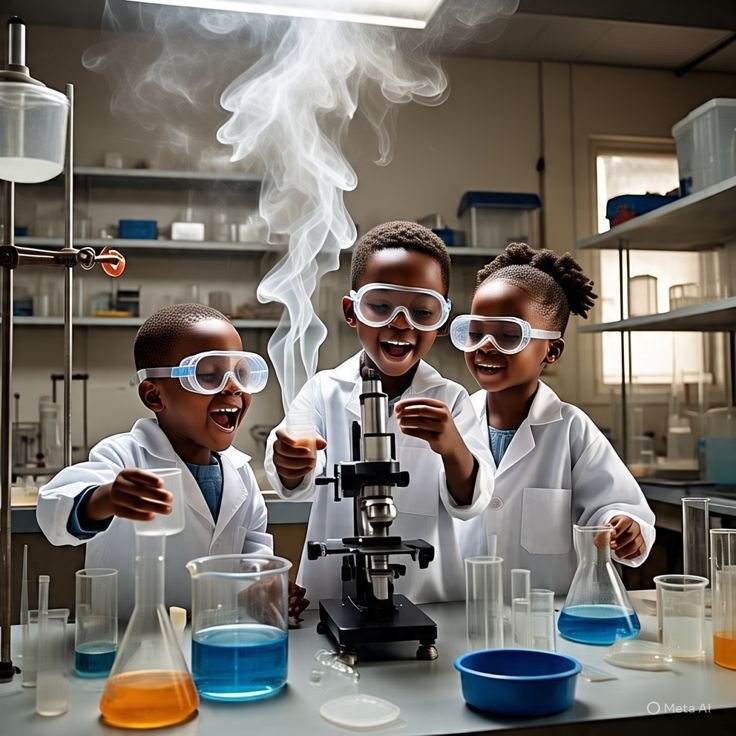
The goal is for all pupils to be knowledgeable and informed innovators and problem-solvers. STEAM (science, technology, engineering, arts, and math) ignites curiosity and passion for exploration to develop skills in alignment with Next Generation Science Standards. Younger pupils have dedicated outdoor classes in the Adventure Playground as well as interdisciplinary, inquiry-based projects. Middle school classes are interactive and provide a foundation for more complex scientific concepts, increasingly integrated with technology and mathematics. Older grades (specifically 4th and 5th grades and 7th and 8th grades) are taught in tandem; the shared program alternates yearly.
PRENURSERY SCHOOL
Preschoolers learn to observe the living world and engage with the Adventure Playground respectfully. Basic ecological principles are taught through seasonal exploration. Through direct interaction with nature, children develop curiosity and begin asking questions about the world around them. Emphasis is placed on stewardship, where children learn to care for their shared environment and the creatures within it. Educators use stories, songs, and simple observational tools to support students in building early scientific language and awareness. Young learners develop empathy, observation skills, and an appreciation for natural systems, setting the stage for deeper scientific understanding in later years.
KINDERGARTEN
Through the world of pumpkins, weather, and the changing seasons, pupils learn to use simple scientific tools like thermometers and weathervanes, observe cloud formations, and conduct basic experiments. They ask questions and describe patterns they notice in nature. Pupils also learn basic coding concepts, both off- and online, by giving and following directions, using algorithms, and animating characters through visual programming. Pupils engage in the engineering design process by building shade shelters for a fictional classroom dog, Penny. They develop confidence in sharing their ideas, test them through hands-on STEAM projects, and refine their work.
1ST GRADE
In STEAM explorations of light, sound, and chemistry, students observe natural phenomena, build kaleidoscopes, explore density through bubbles, and create instruments. They write and debug block-based code to explore basic computational thinking; their science skills grow as they investigate ramps and motion, applying concepts such as force, speed, and direction; they engineer devices to clean up an imagined trash-covered park. Pupils collaboratively use creativity and critical thinking to refine their designs. In the classroom, pupils also engage in a unit on ant colonies, where there is a strong focus on teamwork, and a unit on dinosaurs, where they become experts on a topic.
2ND GRADE
Pupils investigate STEAM topics of pollination, ecology, and how communities are built and sustained, and they learn to be stewards of the Adventure Playground. They apply engineering and design skills to create blueprints and models for a Neighborhood Project, integrating mapping, equity, and architectural design. Pupils develop computational thinking by writing simple algorithms through offline games and block coding platforms. They construct large-scale cardboard forts incorporating simple machines. In a multi-disciplinary Ornithology Project, students observe native bird species in the field and learn about adaptations. These experiences nurture teamwork, technical skills, and a connection to the natural world.
3RD GRADE
Pupils read and create maps to learn about local geography and ecosystems, creating paper mâché topographical models and building small-scale wetland models. They study native trees and design devices to mimic nature’s seed dispersal strategies. In technology and engineering, pupils practice offline coding and move into online block-based programs to build confidence with computational thinking. They apply engineering skill to design and construct model Miwok homes that can withstand the conditions of the Adventure Playground. This project evolves to include river systems and tule boats, deepening their understanding of indigenous innovation and environmental adaptation.
4TH GRADE
Pupils build technical skills and scientific understanding through in-depth explorations in circuitry, coding, and data visualization. Pupils begin with foundational electricity concepts, designing and building their own closed, parallel, and series circuits. They also explore conditionals, loops, and functions using Cody Rocky robots, showcasing problem-solving and creative thinking. Pupils also focus on data representation by analyzing datasets and creating infographics that tell compelling, visual stories. In their study of human anatomy, students conduct hands-on investigations, studying the circulatory, respiratory, and digestive systems through dissections, physical tests, and model-building.
5TH GRADE
STEAM pupils explore concepts from outer space and the solar system to earth and physical science and deep-sea adaptations. Pupils engage in hands-on activities like building bottle rockets, studying bioluminescent sea life, and designing suits for survival in deep ocean pressure. These interdisciplinary experiences build lab skills, curiosity, and systems thinking, while encouraging collaboration and a sense of wonder about both our planet and beyond.
6TH GRADE
Pupils hone their identity as scientists and engineers. Their scientific measurement skills in precise data collection are used to design, test, and iterate buoyant boats. On Technology Tuesdays, they code animations and interactive programs with sprites, variables, and conditionals, fostering digital fluency and creativity and understanding the structure of computer programs. Pupils explore earth science through earthquake models, erosion simulation, and building aquifers, using stop-motion filmmaking and 3D design tools to present their understanding in a natural disaster research project and showcase. Pupils build research, design, and storytelling skills while exploring science in real-world contexts.
7TH GRADE
In their exploration of the living world, students investigate life’s defining characteristics, develop their scientific thinking, and explore ecosystems through labs and discussions. Key topics include the scientific method, climate change, trophic levels, macromolecules, and cell theory. Pupils design experiments, organize and interpret data, and make claims based on evidence. Studies include cell function, energy transfer, genetics, and evolution. They examine ethical issues in science through case studies like the scientific discovery with social justice. The year ends with deepened understanding of biological systems and the scientific process, preparing pupils for high school science.
8TH GRADE
In their exploration of the physical world, pupils explore chemistry and physics. The investigation of motion, force, energy, and engineering design is deepened through hands-on labs and collaborative projects where they apply Newton’s Laws, measure physical phenomena, and engage in amusement-park physics challenges. Key topics include the scientific method, measurement, temperature, and work. Pupils design experiments, analyze data, and develop problem-solving skills in a collaborative setting. In chemistry, pupils explore matter, atomic structure, the periodic table, and chemical reactions. They examine the role of ethics in science and build scientific literacy through inquiry and reflection.