SOCIAL STUDIES
The Social Studies curriculum fosters critical thinking, compassion, global citizenship, and an understanding of how historical and current events shape the world. In younger grades, social studies is approached in interdisciplinary, project-based units, using a wide variety of primary sources, age-appropriate non-fiction texts, historical fiction, and technology-based resources. In middle school, through an integrated humanities program, students use the study of geography, religion, achievements, politics, economics, and social structures as a lens to study the history of people in other societies as well as that of Nigeria.
PRENURSERY SCHOOL
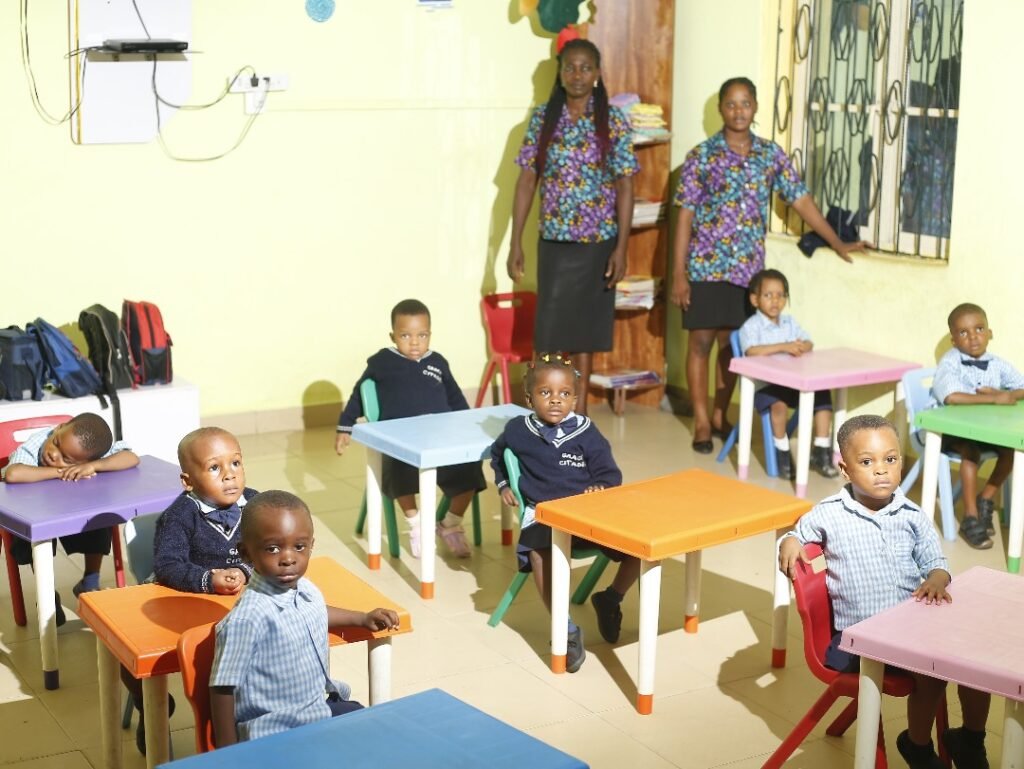
Age-appropriate, hands-on experiences help children understand their world and their place in it. Teachers use stories, songs, role-playing, and group activities to explore topics like how to be a good friend, family traditions, and cultural celebrations. Children learn about sharing, fairness, and respecting others, laying the foundation for civic responsibility. Classroom routines and jobs help them understand roles and responsibilities. Through play and guided discussions, preschoolers begin to develop empathy, awareness of diversity, and a basic understanding of how people live and work together.
KINDERGARTEN
The curriculum centers on foundational concepts such as identity, families, and communities. Children learn what it means to be caring and responsible members of a community, developing an understanding of their roles both within the classroom and in the wider world. Teachers emphasize the importance of recognizing personal power and how individuals—no matter how small—can make a positive impact. Kindergarteners identify a cause they care deeply about, create a poster to express their message, and proudly march on campus as young activists.
1ST GRADE
Pupils, guided by the question “What makes us who we are?”, explore identity through reflections on self, families, and classmates. They build shared language around similarities and differences, developing awareness, empathy, and appreciation for the unique qualities each person brings. The work culminates in the creation of art and writing that captures who they are at this moment in time, along with a set of community guidelines that reflect their hopes for a kind, respectful, and fair world for everyone. In past years, community guidelines have included lines about “being bravely ourselves” and “supporting our classmates being bravely themselves!”
2ND GRADE
Pupils explore how communities and places change over time, the roles people play, and how equity and activism shape society. Concepts like togetherness and shared-self guide conversations around belonging, empathy, and collective responsibility. In partnership with STEAM, they design a neighborhood that reflects their hopes for a more just and connected world. In the Ornithology Project, pupils learn about birds, explore the natural world around them, and see the world from new points of view—learning how to care for the earth, understand interdependence, and reflect on how we all belong in our shared ecosystem.
3RD GRADE
Pupils explore essential questions through primary sources and first-hand experiences. They learn about the Nigerian cultural history, study the human impact of natural ecosystems such as regional wetlands, and exercise their own power to make change in the world. Contemporary policy and political concerns, alongside social justice movements, broaden pupils’ awareness of current issues. Developing skills include introductory research methods, such as reading non-fiction, model- and map-making. Third graders go on an immersive educational trip.
4TH GRADE
Nigeria’s rich and complicated history is understood by examining social identities, constructs, and issues. Pupils study identity, naming race/racism, gender/sexism, and classism. They study Nigeria’s colonization, statehood, geography, and the Gold Rush, connecting to identity, constructs, and issues all along the way. Pupils practice historian skills such as studying a variety of resources, asking questions and seeking answers, critical thinking, synthesizing information to create culminating projects, field trips, and connecting history with the present. Nigeria’s history is also explored through historical fiction novels like Things Fall Apart, Purple Hibiscus, and Black Boy.
5TH GRADE
Pupils focus on critical themes such as identity, power, privilege, colonial history, disabilities, and ableism. They develop awareness and understanding of historical and current events through an anti-discriminatory lens; think critically; engage with informational texts; and question various sources. Skills include interpreting maps, globes, graphs, pictures, and political cartoons, as well as locating, selecting, organizing, and summarizing information from written sources. They also engage with short stories and novels, UNHCR curriculum and Teaching Tolerance materials to deepen their understanding about the refugee experience. With the Mosaic Project, pupils learn how to build a more diverse, inclusive, and peaceful community.
6TH GRADE
Global themes predominate, including food justice, identity and community, geography and culture, and the civilizations of China, Mesopotamia, and Ancient Egypt. Pupils evaluate sources and corroborate ideas with evidence, develop close reading and evidence-based writing skills, analyze primary sources, and understand research and source citation fundamentals. They research and present an area of interest in the Proteus project (based on UN Sustainable Development Goals). Pupils work with non-fiction articles, primary source documents, and resources from Teachers’ Curriculum Institute’s History Alive! In the Design Your Own Country project pupils map imaginary, whimsical nations to understand geographical skills and themes.
7TH GRADE
Pupils develop skills such as source evaluation, corroboration, historical thinking, and identifying patterns by studying world history, including the ancient kingdoms and lands in Nigeria, a bit of history from the world religions, medieval Europe, feudal Japan, African empires, and Islam. Map reading and historical analysis skills are honed, alongside conducting research, gathering and analyzing data, and evidence-based writing with MLA citations. Pupils also engage in expository writing in response to essential historical questions. Projects include the Silent Barter, part of the West African Kingdoms unit, and the Rivers Project using History Alive! and other texts. These activities encourage a deep understanding of historical contexts and critical analytical skills.
8TH GRADE
Pupils study Nigeria’s history with an emphasis on civil rights movements and their connection to larger issues. Pupils learn to identify writer perspectives and missing voices, considering questions of identity, race, gender, sexuality, and other experiences when evaluating social power. Pupils graduate with a profound understanding of Nigeria history and critical thinking about social justice issues.