READING & WRITING
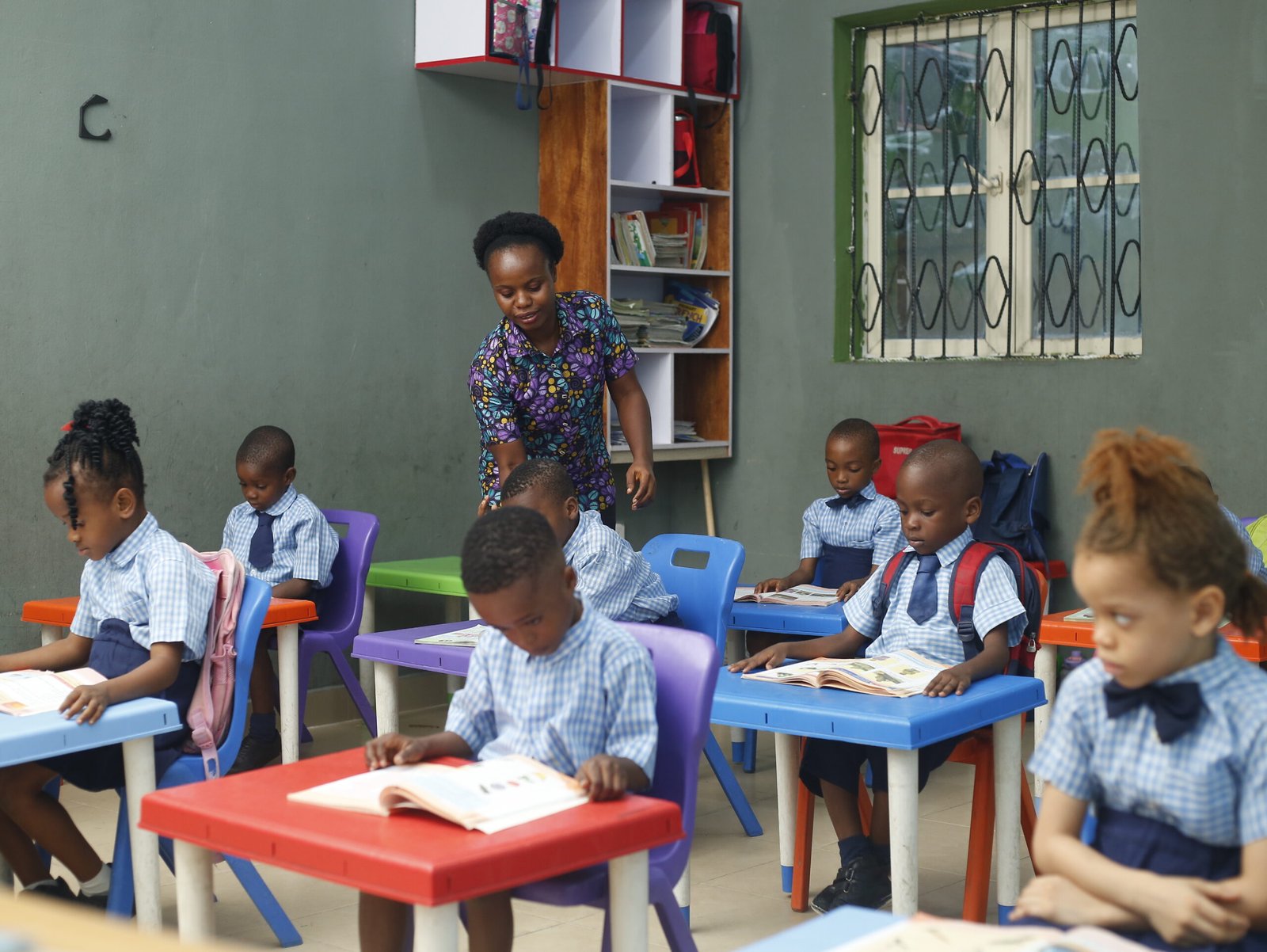
Literacy begins in the earliest grades with a print- and language-rich environment. As they progress through the lower school, pupils learn the fundamentals of reading and writing alongside strategies for deep comprehension, critical interpretation, and effective communication. Beginning in 6th grade, reading and writing are taught with social studies in humanities classes. Humanities focuses on critical thinking, analysis, and communication skills, fostering empathy and understanding of different perspectives. Curricula used throughout Nursery and Post-Nursery schools include Writers Workshop, Foundations, Structured Word Inquiry, Learning Without Tears, Wordly Wise, and Word Work.
PRENURSERY SCHOOL
The initial focus is on phonetics and auditory learning, building a foundation for literacy development. Development of both gross and fine motor skills is crucial as a foundation for writing and is achieved through the use of body regulation, posture, manipulatives, and drawing. Preschool students share items and toys from home that include the phoneme featured in Sound of the Week.
KINDERGARTEN
Pupils enjoy a rich introduction to language arts through literature, poetry, and songs. Using explicit, systematic phonics instruction, the children learn decoding skills for reading. As children read and listen to books, they make predictions about what might happen and share thoughts about the characters and storyline. During Writer’s Workshop, students proudly use their phonics knowledge to bring their words to life, writing true stories, show-and-tell pieces, how-to books, and persuasive writing. Kindergarteners and 6th graders enjoy a collaborative project where they compose and illustrate a hero short story in buddy pairs.
1ST GRADE
Pupils develop their identities as readers and writers and the uniqueness of each path. They read by learning phonics and decoding, supported by rich literature and daily practice. Pupils build fluency, comprehension, vocabulary, and a lifelong love of books. Pupils explore narrative, opinion, and informational writing using mentor texts to guide craft and voice. With a reader in mind, they inform, persuade, and express ideas clearly. Spelling and grammar are taught through phonics-based strategies, helping pupils communicate effectively. Language becomes a powerful tool for every child. They read the McMillan Series throughout the year and celebrate each other’s reading journeys.
2ND GRADE
Pupils engage with “just right” books to build comprehension, stamina, and an understanding of story structure. They use strategies like phonics, context clues, and fluency, and practice retelling, inferring, and making connections to deepen understanding and develop reading identities. In writing, pupil explore small moment narratives, poetry, fairy tale adaptations, and first-person informational texts from the bird study. They follow a structured writing process—drafting, revising, editing, and proofreading—with focus on dialogue, sentence structure, punctuation, and transitioning to standard spelling. Texts that reflect racial and neurodiverse perspectives are prioritized, enriching learning and discussion.
3RD GRADE
Pupils engage in an exploration of prose (mystery, realistic fiction, and informational text) with an emphasis on comprehension and integration with social studies and math. Writers attend to an array of purposes and audiences (personal narrative, “all-about” writing, myth, and persuasive letters) with increasing attention on structure, clarity, voice, revision, and editing. Through their cross-disciplinary study, pupils create informational pamphlets about the local ecosystem.
4TH GRADE
Pupils transition from learning to read to reading to learn. They explore fiction, using metaphors like mirrors, windows, and doors to understand the human condition. Pupils also engage through comics before focusing on nonfiction. Reading skills are developed through teacher read-alouds, small group instruction, independent reading, and Book Club novels. In writing, pupils refine their voice, syntax, and word choice while drawing inspiration from published authors. They write across genres including poetry, fantasy, personal narrative, comics, and expository texts. Pupils approach spelling with a curious, analytical approach through etymology, morphology, and other linguistic elements, supporting growth in literacy and expression.
5TH GRADE
Book clubs provide a literary community where students work in groups, learn responsibility, perspectives, and responsive communication. They connect deeply to literature with an analysis toolbox and think expansively about all types of reading. Autonomy and independent reading are strengthened. In writing, pupils analyze mentor texts, draft, revise and publish. They write in genres that include narrative, information, opinion, and poetry with increased focus on giving and receiving critical feedback about writing criterion and the conventions of writing. The annual cookbook project is a compilation of treasured and diverse family recipes and stories shared and published by the pupils.
6TH GRADE
Book clubs provide a literary community where students work in groups, learn responsibility, perspectives, and responsive communication. They connect deeply to literature with an analysis toolbox and think expansively about all types of reading. Autonomy and independent reading are strengthened. In writing, students analyze mentor texts, draft, revise, and publish. They write in genres that include narrative, information, opinion, and poetry with increased focus on giving and receiving critical feedback about writing criterion and the conventions of writing. The annual cookbook project is a compilation of treasured and diverse family recipes and stories shared and published by the pupils.
7TH GRADE
Book groups continue to be important as students critically analyze novels, organize their ideas and evidence, and have critical conversations. Connections between history and literature become evident in the works of historical fiction and memoir and even in dystopia and verse. As writers, students explore different fiction and non-fiction. As writing stamina increases, elements of literature and figurative language are incorporated. They specifically practice expository and analytical essay writing, complete personal narratives and memoirs, and literary and poetry analysis. They do all this as they develop increasing independence in the writing process.
8TH GRADE
Multicultural perspectives and connections with historical events are intensified as pupils see gender identity and social norms portrayed in fiction; identify literary and poetic devices; and experience drama as a conduit of the human experience. They write using figurative language; develop expository and analytical essay writing; and practice outline work, thesis development, and peer review. With a writing rubric, they assess their work and writing goals. They complete personal narrative essays and write poetry. Writing and photography (with a participatory writing workshop involving an exhibition) are shared in a public reading at partnering arts institutions or local businesses.